Metabolic/AdipolyticWADA Prohibited
Tesofensine
Synonyms: NS2330, NS-2330
Sequence: (1R,2R,3S,5S)-3-(3,4-dichlorophenyl)-2-(ethoxymethyl)-8-methyl-8-azabicyclo[3.2.1]octane
Critical Safety & Regulatory Notice
Tesofensine is classified as a regulated, unapproved, or research-only substance. Doping/Regulatory Status: Not FDA approved. Investigational status. Not prohibited by WADA.. Clinical safety profiles for human use are deficient or not approved.
History & Discovery Timeline
Tesofensine was originally developed by NeuroSearch in the early 2000s and later licensed to Saniona. It was initially investigated for the treatment of neurodegenerative diseases such as Parkinson's and Alzheimer's.
What it is: Tesofensine is a monoamine reuptake inhibitor that indirectly functions like a peptide modulator. It is classified as an investigational metabolic and adipolytic compound with strong appetite-suppressive qualities.
Proposed Mechanisms & Research Findings: It works by inhibiting the reuptake of dopamine, serotonin, and noradrenaline in the brain. This increases synaptic concentrations of these neurotransmitters, modulating hypothalamic feeding centers to decrease food intake and increase energy expenditure.
Regulatory & Safety Status: It is not FDA approved and remains in clinical trial phases. Successful Phase II trials (TIPO-1) demonstrated significant weight loss, but it is still undergoing regulatory review. Sourcing gray-market forms carries substantial psychological and cardiovascular risks.
Athletic & Anti-Doping Status: It is not currently on the WADA prohibited list, but it is monitored due to its stimulant-like activity on the central nervous system.
Understanding Tesofensine Key Facts
Primary Target System:CNS
Residue Count / Length:10 Amino Acids
Primary Action & Category:Monoamine Reuptake Inhibitor (Metabolic/Adipolytic)
Primary Receptors:Serotonin Transporter (SERT), Dopamine Transporter (DAT), Norepinephrine Transporter (NET)
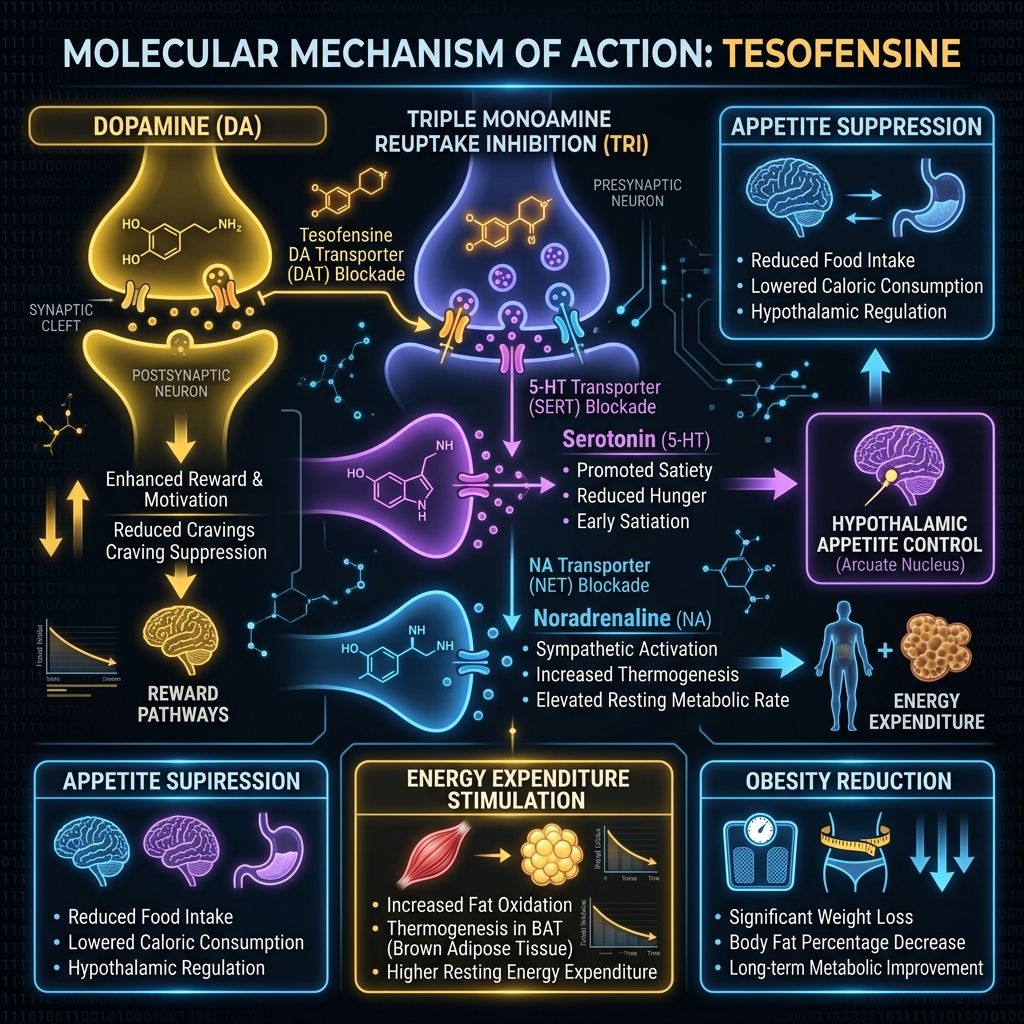
Figure 1: Detailed molecular mechanism pathways of Tesofensine (click to enlarge).