Tissue Repair/ImmuneUnregulated/Therapeutic
LL-37
Synonyms: Cathelicidin antimicrobial peptide, CAMP
Sequence: Leu-Leu-Gly-Asp-Phe-Phe-Arg-Lys-Ser-Lys-Glu-Lys-Ile-Gly-Lys-Glu-Phe-Lys-Arg-Ile-Val-Gln-Arg-Ile-Lys-Asp-Phe-Leu-Arg-Asn-Leu-Val-Pro-Arg-Thr-Glu-Ser
History & Discovery Timeline
LL-37 was identified in 1995 as the active antimicrobial peptide cleaved from human cathelicidin (hCAP18). It is part of the body's primary innate immune response.
What it is: LL-37 is a 37-amino-acid, amphipathic alpha-helical peptide. It belongs to the cathelicidin family of antimicrobial peptides (AMPs) and falls under Tissue Repair/Immune.
Proposed Mechanisms & Research Findings: It acts by disrupting the cell membranes of bacteria, fungi, and viral envelopes. It also modulates immune cells, acting as a chemoattractant and promoting wound healing and angiogenesis.
Regulatory & Safety Status: It is not FDA approved. It is restricted to laboratory research and experimental clinical use. Sourcing from online grey-market vendors carries significant risks of systemic toxicity.
Athletic & Anti-Doping Status: LL-37 is not prohibited by WADA, as it operates as an antimicrobial agent and does not influence athletic performance metrics.
Understanding LL-37 Key Facts
Primary Target System:IMMUNE, CNS
Residue Count / Length:37 Amino Acids
Primary Action & Category:Cathelicidin Peptide (Tissue Repair/Immune)
Primary Receptors:Formyl Peptide Receptor 2 (FPR2), P2X7 Receptor, EGFR Transactivation Site
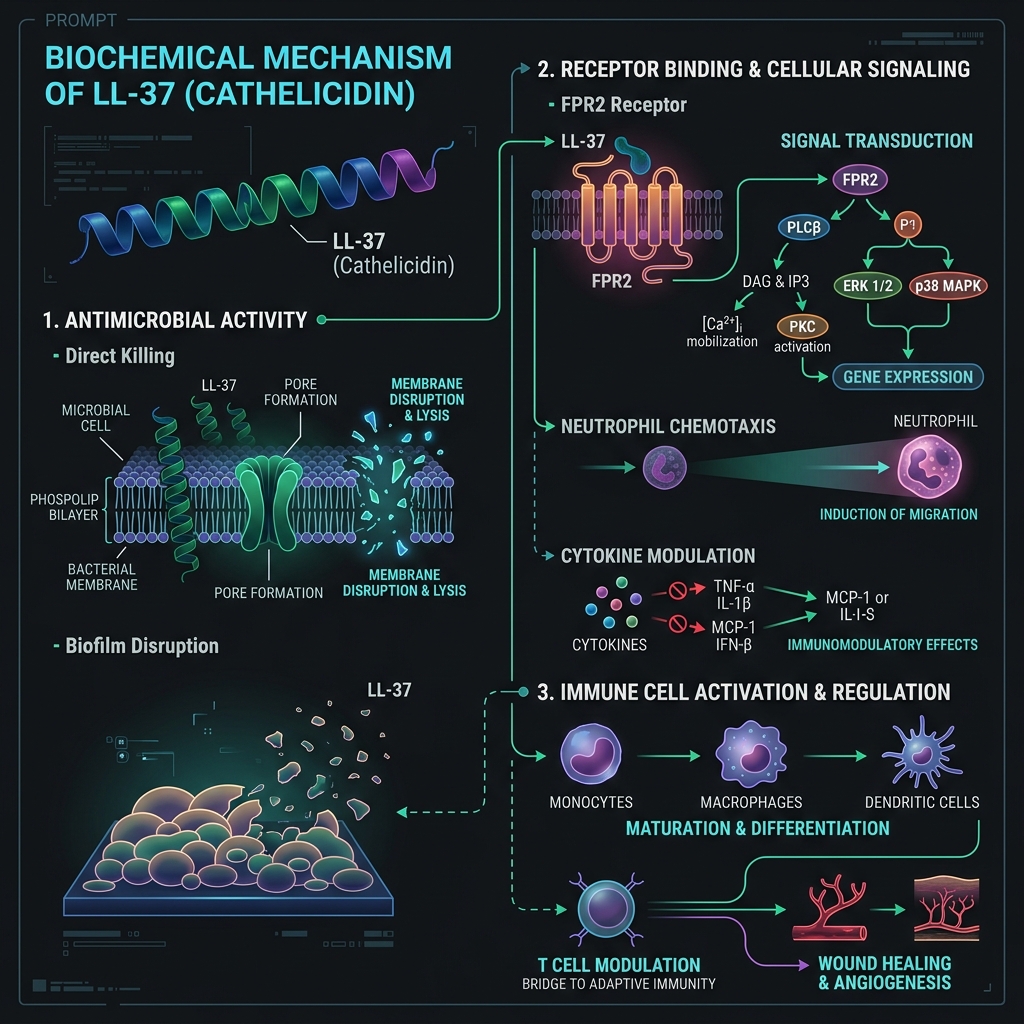
Figure 1: Detailed molecular mechanism pathways of LL-37 (click to enlarge).