Anti-aging/CosmeticUnregulated/Therapeutic
Epitalon
Synonyms: Epithalon, Epithalumin, Ala-Glu-Asp-Gly
Sequence: Ala-Glu-Asp-Gly
History & Discovery Timeline
Epitalon was discovered by Professor Vladimir Khavinson at the St. Petersburg Institute of Bioregulation and Gerontology in the 1990s during research into short bioregulational peptides.
What it is: Epitalon is a synthetic tetrapeptide (Ala-Glu-Asp-Gly) designed to mimic the natural peptide epithalamin secreted by the pineal gland. It is categorized as an anti-aging and cosmetic peptide.
Proposed Mechanisms & Research Findings: It acts by stimulating the production of telomerase, which extends telomeres in cells, allowing them to exceed the Hayflick limit of division. It also regulates melatonin secretion and restores pineal gland function.
Regulatory & Safety Status: It is not FDA approved for medical use. It is sold online as a research chemical or cosmetic additive. Gray-market injectables carry risks of non-sterility and unknown long-term effects.
Athletic & Anti-Doping Status: Epitalon is not prohibited by WADA or USADA, as it does not directly promote muscle growth or performance enhancement.
Understanding Epitalon Key Facts
Primary Target System:CNS, NEUROENDOCRINE, IMMUNE
Residue Count / Length:4 Amino Acids
Primary Action & Category:Telomerase Activator (Anti-aging/Cosmetic)
Primary Receptors:Chromatin binding sites, Pineal Receptor Pathways, Thymus Tissue Activator Site
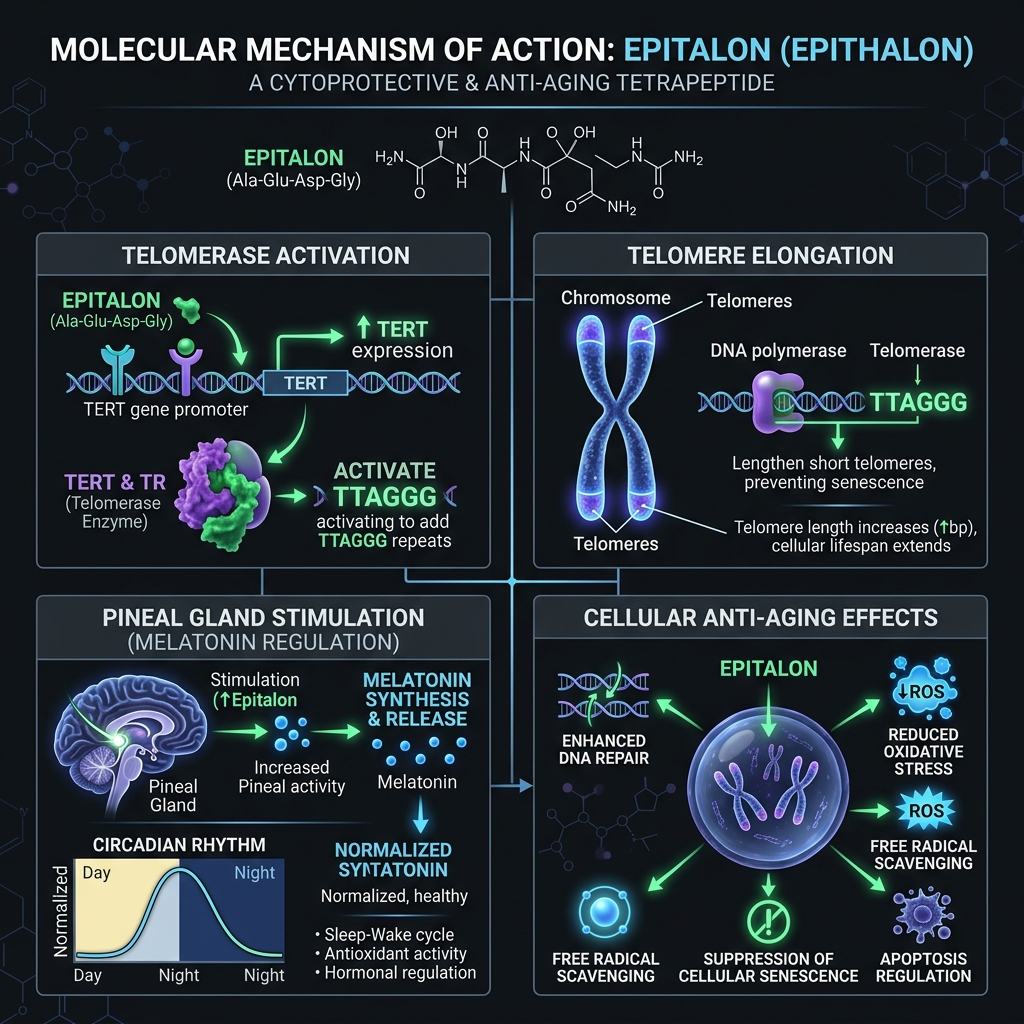
Figure 1: Detailed molecular mechanism pathways of Epitalon (click to enlarge).